
Hey there! As an e-motor supplier, I've been in the thick of the electric motor world for quite a while. One question that pops up a lot is, "How does an e-motor convert electrical energy into mechanical energy?" Well, let's dive right into it.
First off, let's understand the basic parts of an e-motor. There are two main components: the stator and the rotor. The stator is the stationary part of the motor. It's usually made up of a bunch of coils of wire. These coils are arranged in a specific pattern around the inside of the motor housing. The rotor, on the other hand, is the rotating part. It can be a permanent magnet or another set of coils.
Now, when we talk about converting electrical energy into mechanical energy, it all boils down to the principles of electromagnetism. You see, when an electric current flows through a wire, it creates a magnetic field around that wire. This is a fundamental concept discovered by Hans Christian Ørsted way back in 1820. In an e-motor, we use this principle to our advantage.
Let's start with the stator. When we apply an electrical current to the coils in the stator, each coil becomes an electromagnet. The direction of the magnetic field created by each coil depends on the direction of the current flowing through it. By carefully controlling the current in each coil, we can create a rotating magnetic field inside the motor.
This rotating magnetic field is the key to making the motor work. The rotor, being either a permanent magnet or an electromagnet itself, interacts with this rotating magnetic field. If the rotor is a permanent magnet, the magnetic field of the stator will either attract or repel the rotor's magnetic field. This attraction and repulsion cause the rotor to start spinning.
If the rotor is made up of coils, we call it a wound rotor. In this case, the rotating magnetic field of the stator induces an electric current in the rotor coils. According to Faraday's law of electromagnetic induction, a changing magnetic field can create an electric current in a conductor. Once there's an electric current in the rotor coils, they also become electromagnets. These electromagnets then interact with the stator's magnetic field, causing the rotor to rotate.
The speed and torque of the motor can be controlled by adjusting the electrical current applied to the stator coils. If we increase the current, the magnetic field in the stator becomes stronger. This stronger magnetic field will cause the rotor to spin faster or generate more torque, depending on the load on the motor.
Now, let's talk about the different types of e-motors. There are several types, but the most common ones are DC motors and AC motors.
DC motors are relatively simple. They work by applying a direct current (DC) to the stator coils. The direction of the current in the stator coils is fixed, which creates a static magnetic field. To make the rotor spin continuously, we use a device called a commutator. The commutator is a split ring that reverses the direction of the current in the rotor coils at just the right time. This reversal of current ensures that the rotor keeps spinning in the same direction.
AC motors, on the other hand, use an alternating current (AC). The advantage of AC motors is that they can be more efficient and have better speed control. In an AC motor, the stator coils are connected to an AC power source. The alternating current causes the magnetic field in the stator to constantly change direction, creating a naturally rotating magnetic field. There are different types of AC motors, such as induction motors and synchronous motors.
Induction motors are the most widely used type of AC motor. They work based on the principle of electromagnetic induction. The rotating magnetic field of the stator induces an electric current in the rotor, which then creates a magnetic field in the rotor. The interaction between the stator and rotor magnetic fields causes the rotor to rotate.
Synchronous motors, as the name suggests, rotate at a speed that is synchronized with the frequency of the AC power supply. They are often used in applications where precise speed control is required, such as in industrial machinery.
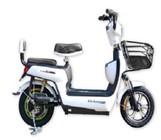
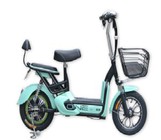
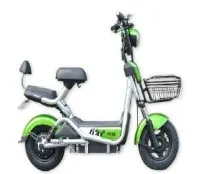
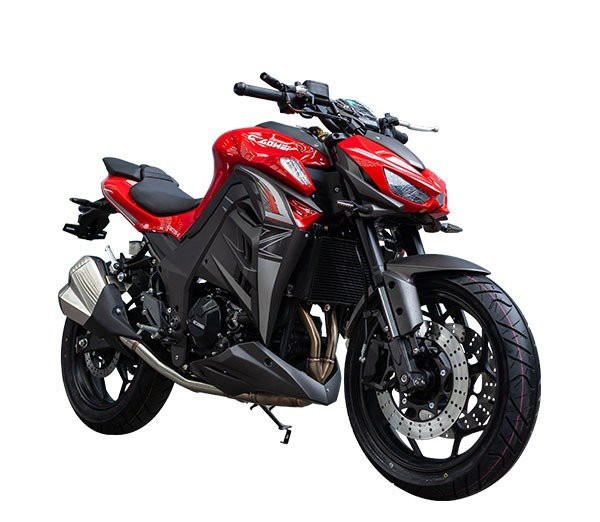
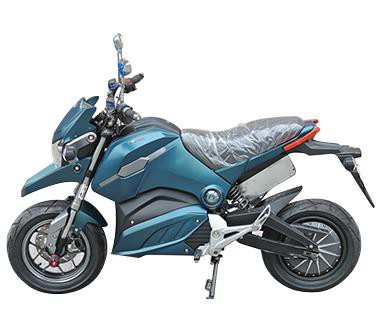
As an e-motor supplier, we offer a wide range of motors for different applications. For example, if you're interested in electric motorcycles, we've got some great options. Check out our Electric Sport Motorcycle for a high-performance ride. Or if you're looking for something more compact, our Hot Popular Electrical Adults Ride On Mini Electric Motorcycle For Adults is a great choice. And for those who want a battery-operated option, our E Motorbikes Battery Operated Motorcycle is worth considering.
In addition to motorcycles, our e-motors are also used in various other industries, such as automotive, aerospace, and industrial automation. We work closely with our customers to understand their specific needs and provide them with the most suitable motor solutions.
If you're in the market for an e-motor, whether it's for a small project or a large industrial application, we'd love to hear from you. We can offer technical support, advice on motor selection, and competitive pricing. Just reach out to us, and we'll start the conversation about how we can meet your e-motor needs.
In conclusion, the conversion of electrical energy into mechanical energy in an e-motor is a fascinating process that relies on the principles of electromagnetism. By carefully controlling the electrical current and the magnetic fields, we can make the motor spin and perform useful work. Whether you're a hobbyist building a small electric vehicle or an engineer designing a large industrial machine, understanding how e-motors work is essential. And as your trusted e-motor supplier, we're here to help you every step of the way.
References:
- Halliday, D., Resnick, R., & Walker, J. (2014). Fundamentals of Physics. Wiley.
- Fitzgerald, A. E., Kingsley, C., & Umans, S. D. (2003). Electric Machinery. McGraw-Hill.